
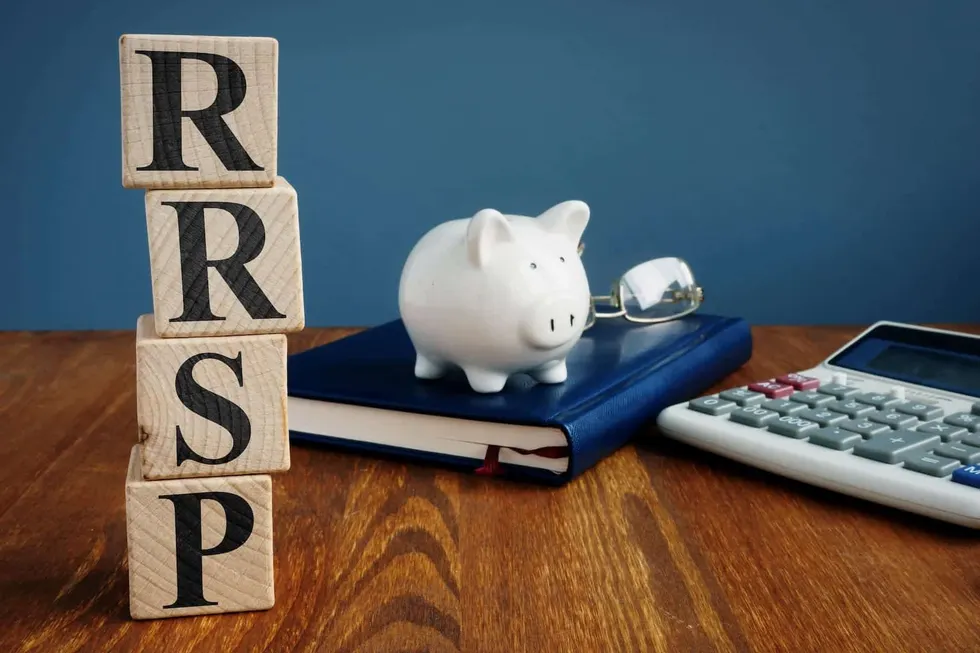
If a Registered Retirements Savings Plan (RRSP) is currently part of your financial portfolio, you’ll have until March 1, 2023, to maximize your 2022 contribution. If you don’t hold an active RRSP, this blog may convince you to act now to realize immediate tax savings on your 2022 personal tax returns.
What is an RRSP?
Simply put, an RRSP is a tax-deferred investment account. Contributions to the plan reduce taxable income in the year they are deposited, creating immediate tax benefits.
In Grande Prairie, we are fortunate enough to have a high percentage of wage earners making above $100,000 annually. Here’s a simple example of how RRSP contributions of just 10% can immediately and directly affect the taxable income of earners in this tax bracket:
Scenario 1: No RRSP contribution = $100,000 in taxable income or $24,000 paid in income tax
Scenario 2: $10,000 RRSP contribution = $90,0000 in taxable income or $20,400 paid in income tax
If we use a 36% average personal tax rate, the reduction in taxable income will result in approximately $3,600 in immediate tax savings. To make the most of this tax deferral, it is advisable to reinvest the tax return from your contributions back into your RRSP.
Opening an RRSP
An RRSP account can be opened at most financial institutions, through your financial advisor, or through an online trading platform. Plans can be managed professionally or self-directed, and you can open the account as an individual or as a spousal RRSP to more evenly distribute retirement income for partners with a large earning gap. Regardless of how the account is set up, all RRSPs are registered with the Canada Revenue Agency.
Contributing to an RRSP
Canadians can start contributing to their RRSP at any age until December 31 of the year the plan holder reaches the age 71.
The personal RRSP contribution limit for the 2022 taxation year is 18% of earned income reported on your tax return in the previous year, less any pension adjustment amount, up to a maximum of $29,210. RRSP contribution room that goes unused in any particular year can be carried forward. Unused contribution room can be found on your notice of assessment or by logging into CRA online using the My Account for Individuals.
Contributions including interest, dividends, and other gains within the account grow tax-free.
Withdrawing RRSPs
Withdrawals from the account are then taxed when the funds are withdrawn, ideally in retirement when income is taxed at a lower rate. RRSPs can also be withdrawn for other major life events, such as buying your first home or pursuing higher education.
Under the Home Builders Plan (HBP), up to $35,000 can be withdrawn from an RRSP to buy a build a first home. These withdrawals are treated similarly to a loan from the account where the holder has up to fifteen years to re-contribute the funds however these repayments to the HBP do not qualify for a tax deduction.
The Lifelong Learning Plan (LLP) allows you to withdraw up to $10,000 per calendar year, to a maximum of $20,000, to finance full-time education or training for yourself or a spouse/common-law partner. Repayment to the RRSP account can be made over a maximum of ten years and starts when the recipient no longer qualifies as a student or by the fifth year after the first withdrawal.
When considering the tax benefits of an RRSP, it is important to understand that the tax deferral benefit assumes the fund holder is earning more income and subject to a higher tax rate compared to their income in retirement when the fund is intended to be withdrawn.
Where you hold an RRSP account, how it is invested, and if you choose to take advantage of the withdrawal options available should support your overall financial plan and tolerance to risk. When you work with qualified, financial professionals, they can help you maximize your use of an RRSP account by considering how it fits in with other investments and tax planning. There are many Grande Prairie resources but we hope you’ll think of us here at McNabb Lucuk LLP when you’re ready to take the next step.